

Tool summary
PriceRest is software for comparing competitor offers with a merchant's catalog, tracking price and stock changes, and applying pricing rules. Its Shopify App Store listing describes product import and automatic updates to Shopify product prices. PriceRest also advertises assisted product matching and alerts for price changes and potential minimum advertised price (MAP) violations.
The useful sequence is to establish which competitor listing represents the same sellable item, monitor that offer, then decide whether a Shopify price should change. A wrong match can make every later price comparison misleading. This profile is based on published materials; ATFE has not measured matching accuracy or tested repricing.
Quick Verdict
PriceRest may suit a Shopify merchant with comparable branded products, named competitors, and someone responsible for reviewing match quality and pricing rules. It is more relevant when the team needs monitoring to inform a controlled repricing process than when it only wants a dashboard of rival prices.
Budgeting needs care. The direct website and Shopify listing publish different plan structures, competitor-site allowances, check frequencies, and descriptions of advanced features. Matching, API use, variant tracking, and additional competitor sites may bring extra charges, but the public pages do not provide a complete quote. Merchants should confirm the terms for their intended signup route before enabling automatic price changes.
Key Features
- Competitor price and stock monitoring: PriceRest's pricing page lists price history, daily checks, stock monitoring, notifications, and price-position information. An instant check is also listed, but that does not establish continuous automatic monitoring for every plan.
- Assisted product matching: The vendor's matching explainer describes finding candidates through search and shopping listings, then weighing product identifiers, images, titles, and price deviation to produce a match score. That score is a review aid, not independently verified proof that a candidate has the same variant or pack size.
- Rule-based repricing: The Shopify app listing describes automatic repricing within configured cost and margin rules. The vendor's Shopify page gives competitor-relative rule examples. Neither page establishes the reliability of a merchant's particular configuration.
- MAP and price alerts: Published plans include price-violation notifications. A detected advertised price can prompt investigation; the alert does not establish a legal violation or identify every reseller offer.
- Shopify product connection: The listed app imports products and requests permission to edit products. Merchants should treat automated price write-back as a store change requiring an approved rule and a way to review unexpected results.
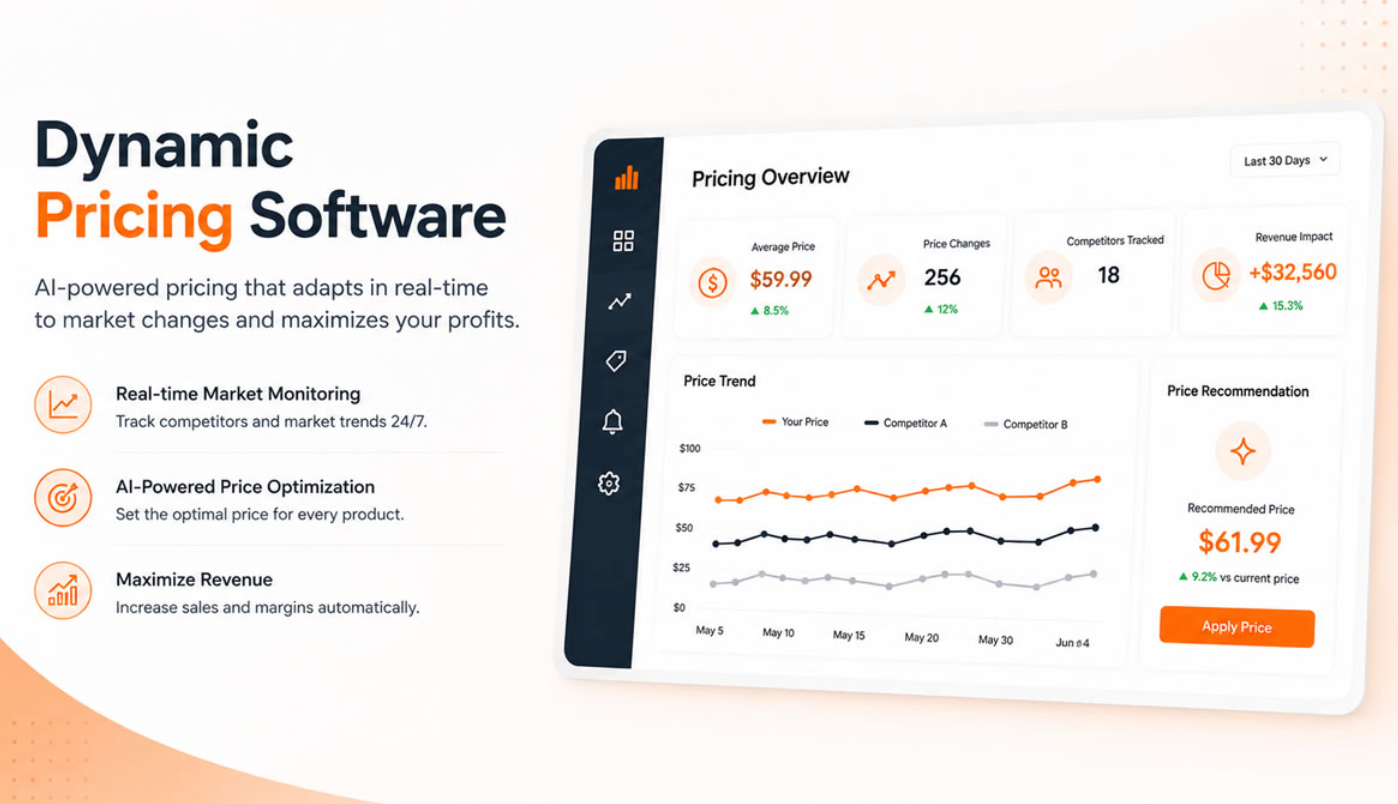
How monitoring becomes repricing
1. Verify the product match
PriceRest describes an automated search for candidate competitor listings. A merchant should inspect a representative sample before using those candidates in pricing rules. A title or image may look right while the listing has a different size, color, bundle, condition, or seller. Product codes can help, yet the delivered offer may still differ through shipping, tax, discounts, currency, or availability. These checks are ATFE editorial recommendations, not steps we observed inside an account.
2. Check the monitored price and its timestamp
The direct plan table calls its standard check cadence daily. The Shopify listing specifies one update per day for Basic and two per day for Professional. A promotional “real-time” description should not be read as a promise of continuous collection at either tier. Before reacting to an apparent price gap, a merchant should check the last successful observation and the competitor's current offer.
3. Apply a bounded Shopify rule
The Shopify listing says PriceRest can update product prices automatically within cost and margin rules. It also lists product-edit access. ATFE recommends starting with a small SKU group, excluding ambiguous matches, setting a minimum acceptable margin, reviewing proposed changes, and recording an original price for recovery. These are suggested controls for a merchant-run pilot; ATFE has not verified which approval, logging, or rollback tools PriceRest supplies.
Ecommerce use cases
For a catalog manager, PriceRest can bring changes from selected competitor sites into a repeatable price review. A brand team may use advertised-price alerts to investigate possible MAP exceptions. Shopify merchants with stable, comparable SKUs can evaluate whether competitor-relative rules reduce manual updates without producing unwanted discounts. A store with frequent variants or bundles should put more effort into match review before considering write-back.
Best for
- Shopify and DTC merchants selling products that can be matched to directly comparable competitor offers.
- Pricing teams that can review uncertain matches and define margin boundaries.
- Brands monitoring reseller advertised prices as a signal for follow-up investigation.
When PriceRest may not fit
Merchants with mostly unique, custom, or heavily bundled products may find competitor matching too uncertain to support automated repricing. It is also a difficult fit for a team that cannot review exceptions or cannot tolerate an incorrect product-price update. Buyers needing a fixed, fully published cost for matching, API access, variants, and additional monitored sites should request a written quote before committing.
Pricing: direct website and Shopify app
The following figures are the public USD monthly listings checked Oct 2026. They describe separate signup surfaces and should not be combined into a single entitlement schedule.
PriceRest direct website: The website pricing page lists a 14-day trial without a credit card and these standard plans, each described with daily price checks.
| Direct website plan | Listed monthly price | Products | Competitor sites included without added site setup fee |
|---|---|---|---|
| Basic | $49 | 100 | 10 |
| Professional | $189 | 1,000 | 20 |
| Premium | $389 | 5,000 | 30 |
The direct page marks competitor suggestion and matching, API access, and product variant tracking as subject to extra charges; variant tracking is marked as an extra fee per website. It also states that adding competitor websites beyond the included count triggers a setup fee per site. It does not publish the full amounts.
Shopify App Store: PriceRest's Shopify listing presents the following app plans. It advertises a 14-day trial on Basic and states that recurring and usage-based charges are billed every 30 days.
| Shopify app plan | Listed monthly price | Products | Competitor sites indicated as included | Selected listing language |
|---|---|---|---|---|
| Basic | $49 | 100 | 10 | Price and stock updates once daily; automatic matching and repricing listed |
| Professional | $189 | 1,000 | 20 | Twice-daily updates; variant tracking listed |
| Business | $249 | 2,000 | 30 | API access listed; feature inheritance wording is inconsistent |
| Premium | $389 | 5,000 | 50 | Described as including Business features |
The Shopify listing's Business tier has no counterpart in the direct table. Its Premium competitor-site allowance is 50 versus 30 on the direct site, and its Professional update frequency differs from the direct page's daily wording. The app listing also presents matching, variants, and API as plan features while the direct page flags related extra charges. Ask PriceRest which terms apply to the actual account, whether basic and advanced matching are priced differently, and what each add-on costs. “Unlimited competitors” in the listings does not remove the stated included-site counts or potential setup fees.
Limitations and buying checks
- Match quality remains unknown: ATFE has not measured false matches or missed matches. Review variants, packs, currencies, offer conditions, and unavailable products before acting on a score.
- Refresh speed varies by published channel: Standard direct plans say daily checks; the Shopify listing describes its own frequency by tier. Neither proves uninterrupted live monitoring.
- Store prices can change: The Shopify app's product-edit permission and advertised automatic repricing make a mistaken rule operationally significant. Verify the permission scope, exception path, approval options, audit trail, and recovery method with the vendor.
- Total price is not fully public: Request a written account-specific quote for matching, API, variant tracking, extra competitor sites, and any other usage-based charges.
- Commercial results are unproven here: Vendor statements about profitability or sales do not establish how PriceRest will affect another merchant's margin or revenue.
Alternatives and related reading
ATFE's competitor price monitoring guide covers the wider category and selection criteria. Prisync has its own named-tool profile for monitoring and repricing. VantageDash is a monitoring-led profile for merchants who do not need automatic Shopify price changes. These links provide different evaluation paths, not an ATFE-tested head-to-head result.
Frequently asked questions
Does PriceRest automatically change Shopify prices?
Its Shopify listing advertises automatic repricing within configured rules and requests product-edit access. Merchants should confirm the exact app permissions and available approval or recovery controls for their account before turning on write-back.
Is AI product matching included in the $49 plan?
The Shopify Basic listing advertises automatic matching, while the direct pricing page marks competitor suggestion and matching as an extra-charge tool. The public wording does not establish whether these refer to the same module or different levels of matching. Confirm the entitlement and fee in writing.
How often are competitor prices checked?
The direct website lists daily standard checks. The Shopify listing says once daily on Basic and twice daily on Professional. A merchant's exact plan and any on-demand or extra-frequency charge need confirmation.
Is a 14-day trial available?
The direct website advertises a 14-day trial without a credit card. The Shopify Basic listing also advertises a 14-day trial. Confirm which trial terms apply to the signup route selected.
Official sources
- PriceRest website
- Direct pricing and fee footnotes
- Shopify App Store listing
- Product features
- Product matching explanation
- Shopify dynamic pricing description
Editorial disclosure
This profile is based on PriceRest's public website and its Shopify App Store listing. ATFE has not installed or used PriceRest, tested its product matching, connected a Shopify store, verified automatic repricing, or measured sales or margin outcomes. Published features and prices may change. Fact-checked Oct 2026.