
What is Prisync?
Prisync is competitor price-tracking and dynamic-pricing software for ecommerce merchants and manufacturers. It collects product prices and stock availability from competitor URLs or supported channels, compares market position in a dashboard, and can apply rule-based repricing.
The platform supports URL-based monitoring, channel-based monitoring, and a hybrid model. Current capabilities include price and stock updates, reports, alerts, product variants, marketplace monitoring, price history, MAP monitoring, APIs, and dynamic-pricing rules on eligible plans.
Quick Verdict
Prisync fits a store with a catalog that can be matched reliably to competitors and a clear pricing policy. Monitoring can be useful before automation is enabled. Dynamic pricing should remain inside minimum-margin, inventory, channel, legal, and approval guardrails because a bad match or aggressive competitor move can otherwise propagate into the store.
Key Features
- Competitor monitoring: Track prices and stock from selected URLs and supported sales channels.
- Market comparison: Review price position, competitor changes, and catalog-level reports.
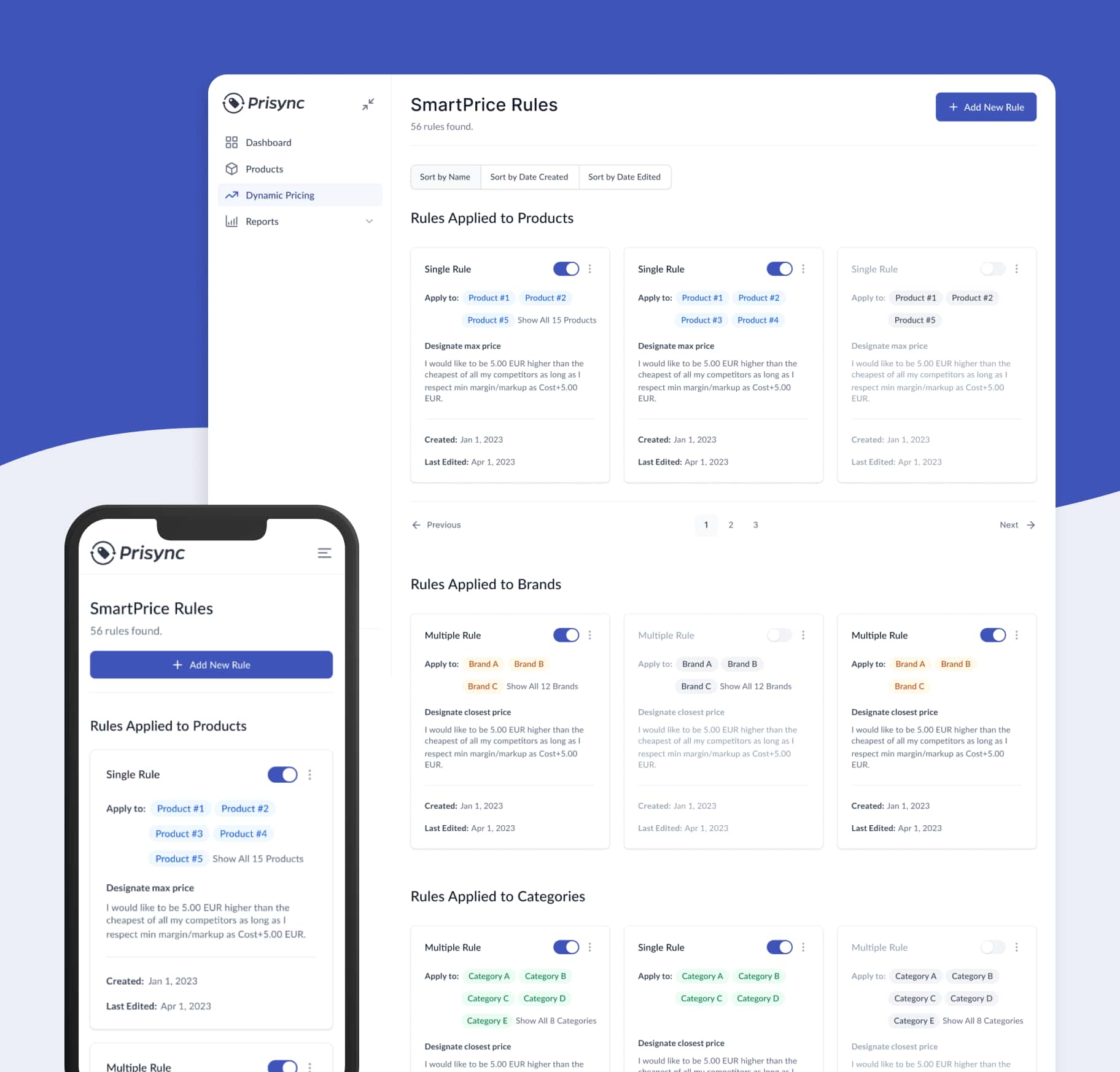
- Dynamic pricing: Apply rule-based changes using competitive position, cost, stock, and configured constraints.
- Alerts and history: Receive plan-dependent notifications and review earlier price movements.
- Variant and marketplace tracking: Monitor eligible product variants and marketplace listings.
- Data operations: Use bulk imports, exports, and API access according to plan.
Ecommerce Use Cases
- Monitor competitor prices for a matched catalog.
- Identify products priced above or below a defined market position.
- Track competitor stock availability before changing a price.
- Apply repricing rules with a cost and margin floor.
- Monitor advertised pricing for a brand or supplier.
A Safe Repricing Workflow
- Validate the product match, pack size, variant, currency, tax, shipping, and stock state.
- Run monitoring without automatic writes and inspect false matches.
- Define cost, minimum contribution, minimum advertised price, maximum change, and excluded products.
- Approve a small reversible rule set for low-risk products.
- Log every change and provide an immediate rollback.
- Measure contribution margin, price errors, overrides, and customer complaints—not only competitive rank.
Best For
Ecommerce teams and manufacturers that manage a matchable competitive catalog and need repeatable price intelligence or governed repricing.
Advantages and Limitations
Advantages
- Combines price monitoring, stock visibility, reporting, and dynamic rules.
- Offers several data-collection models for different catalog structures.
- Supports worldwide sites and currencies under the current plan descriptions.
- Provides a Shopify-specific installation path.
Considerations
- Incorrect product matching can make every downstream recommendation unreliable.
- Dynamic pricing is not included in every entry configuration.
- Channel, hybrid, API, and large-catalog costs can materially increase the subscription.
- Competitor prices do not reveal competitor cost, margin, strategy, or legal constraints.
- Automatic repricing needs floors, caps, exclusions, monitoring, and rollback.
Pricing
Prisync currently advertises a 14-day free trial. Its direct URL-based plans start at $99 per month for up to 100 products, while the Shopify app currently lists a $49-per-month entry plan. Channel-based, hybrid, API, and higher-volume configurations cost more. Verify the applicable product limit, update frequency, channels, and dynamic-pricing access.
Our Take
Begin with price intelligence, not autonomous price changes. A monitored pilot reveals match quality and operational exceptions. Turn on repricing only for products with stable costs and explicit guardrails, then review a change log until the failure rate is acceptably low.
Primary Official Sources
Product and pricing scope were checked against the official Prisync website, features page, and help-center overview.
Related Guide
Compare pricing approaches and safeguards in our ecommerce dynamic pricing software guide.
Frequently Asked Questions
Does Prisync use AI?
Prisync currently describes its platform as AI-powered and combines automated monitoring with pricing recommendations and rules. The exact decision logic and available features depend on the selected workflow and plan.
Can Prisync change Shopify prices?
Eligible configurations can apply dynamic-pricing rules and synchronize price changes. Test with strict limits before broad automation.
Does Prisync offer a free plan?
The current offer is a 14-day trial rather than a permanent free plan.
Editorial method: Official product, documentation, and pricing pages establish documented capabilities and commercial terms. Vendor performance statements are not treated as independent evidence, and ATFE did not run a controlled comparative hands-on test. Last reviewed: September 2026. Verify current features, integrations, limits, pricing, and contract terms before purchase.